
The best AI image generator in 2026 depends on what you’re making — but if you need a quick answer: ChatGPT Image (GPT Image 1.5), Midjourney V7, and Google Gemini lead the pack for most users.
Whether you’re a content creator, marketer, designer, or developer, AI image generation has fundamentally changed how visual content gets made.
This guide breaks down every major tool, what it does best, what it costs, and who it’s actually for.
Why AI Image Generation Has Changed in 2026
A couple of years ago, AI-generated images were easy to spot — soft hands, garbled text, and that unmistakable “AI look.” That era is over.
The models available in 2026 produce work that competes directly with professional photography and illustration.
Tools like ChatGPT’s GPT Image 1.5, Google’s Nano Banana 2, and Midjourney V7 have crossed a threshold where image quality alone no longer separates them from human-made visuals. The differentiators now are speed, prompt accuracy, pricing, and workflow integration.
This shift matters for everyone — the freelancer creating social content, the enterprise team building marketing assets at scale, and the developer embedding generation into a product.
How We Evaluated These Tools
Every tool in this list was tested against the same set of prompts — photorealistic scenes, stylized illustrations, business graphics, and text-heavy social assets. We assessed each one on:
- Image quality and realism
- Prompt accuracy (does it actually generate what you asked for?)
- Speed (time from prompt to usable image)
- Free tier availability
- Pricing and value
- Ease of use
No tool paid for placement here. Rankings reflect performance, not partnerships.
The Best AI Image Generators in 2026
Here are the best AI image generators in 2026
1. ChatGPT Image (GPT Image 1.5) — Best All-Around
OpenAI’s GPT Image 1.5, available through ChatGPT, is the most versatile AI image generator available right now. It handles photorealistic product images, social media graphics, presentations, and image editing within a single interface that most people already use daily.

What sets it apart is the combination of quality and conversational editing. You can generate an image, then refine it through follow-up prompts — adjusting lighting, composition, or style — without starting over. For marketers and content creators who need iteration, this is a genuine workflow advantage.
- Best for: Content creators, marketers, general users who want quality without a learning curve
- Free tier: Yes (limited generations on free plan)
- Paid plan: From $20/month (ChatGPT Plus)
2. Midjourney V7 — Best for Creative and Design Work
Midjourney remains the gold standard for artistic image generation. Version 7 produces work that’s visually exceptional — high detail, coherent composition, and a distinctive aesthetic quality that other tools haven’t matched at this level.
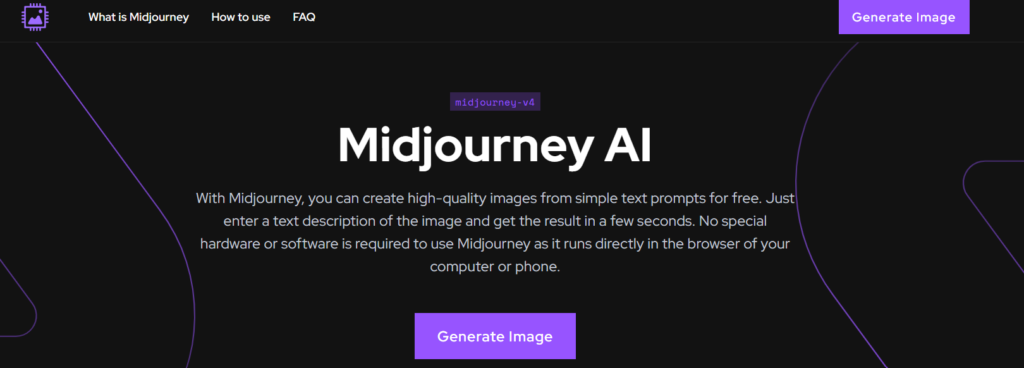
It’s the tool of choice for designers, art directors, and creative professionals who need images for ad campaigns, moodboards, brand concepts, and visual storytelling. The learning curve is real — Midjourney rewards users who understand how to craft precise prompts — but the ceiling is higher than any other tool on this list.
The Discord-based interface has been supplemented by a proper web app, making it significantly more accessible than it was in earlier versions.
- Best for: Designers, creative professionals, anyone prioritizing visual quality above all else
- Free tier: Limited (trial access available)
- Paid plan: From $10/month
3. Google Gemini (Nano Banana 2 model) — Best for Cinematic Realism
Google’s Gemini, powered by the Nano Banana 2 image model, earned the highest realism ratings in independent tests conducted in 2026. Prompt accuracy is exceptional — it produces images that closely match detailed written descriptions, including complex lighting conditions, textures, and environmental details.

It integrates naturally into Google Workspace, making it a strong choice for teams already working in Docs, Slides, and Drive. The free tier is genuinely useful, and the $19.99/month Advanced plan unlocks higher resolution and more generations.
- Best for: Users who need photorealistic output and cinematic quality.
- Free tier: Yes,
- Paid plan: $19.99/month (Google One AI Premium)
4. Adobe Firefly (Firefly Image Model 5) — Best for Design Professionals
Adobe Firefly is purpose-built for the professional design workflow. It integrates directly into Photoshop, Illustrator, and the broader Creative Cloud ecosystem — which means generated images can be immediately refined with professional-grade tools without any file exporting or format juggling.

The Firefly Image Model 5 is particularly strong for generating commercial-safe content. Adobe has trained it exclusively on licensed and public domain material, which matters significantly for teams working on client projects with strict IP requirements.
- Best for: Graphic designers, creative agencies, Adobe Creative Cloud users
- Free tier: Yes (limited monthly credits)
- Paid plan: Included with Creative Cloud; standalone plans from $9.99/month
5. Grok Imagine — Best for Speed
xAI’s Grok Imagine is the fastest AI image generator currently available. If your use case is high-volume, quick-turnaround content — social media posts, memes, rapid concept visualization — Grok delivers usable results faster than any competitor.
Quality sits slightly below the leaders, but for speed-sensitive workflows, the trade-off is often worth it. It’s available through X Premium subscriptions, which makes it accessible to users already in that ecosystem.

- Best for: Social media content, rapid-fire visual ideation, X/Twitter users.
- Free tier: Limited
- Paid plan: Included with X Premium ($8/month)
6. FLUX.2 — Best for Photorealistic Product Visuals
FLUX.2 from Black Forest Labs has carved a strong niche in product photography and realistic concept imagery. It handles materials, textures, and lighting with uncommon accuracy — making it the preferred choice for e-commerce teams, product marketers, and brands that need visuals that look like they came from a professional studio.
It’s available both as a standalone platform and through API, making it a practical option for developers building image generation into their own products.
- Best for: E-commerce, product marketing, developer integration
- Free tier: Yes (via API with limited credits)
- Paid plan: Usage-based pricing
7. Ideogram 3.0 — Best for Text in Images
One of the historically stubborn problems in AI image generation has been readable text. Ideogram 3.0 solves this better than any other tool. For posters, ad graphics, social templates, and any visual where text legibility matters, Ideogram is the clear choice.
If you’re building content that needs a headline, tagline, or label actually to be readable inside the image, this is the tool you reach for first.
- Best for: Marketers, social media managers, and anyone creating text-heavy visuals
- Free tier: Yes
- Paid plan: From $8/month
8. Stable Diffusion 3.5 — Best for Customization and Privacy
Stable Diffusion remains the most flexible option for users who need full control. It runs locally, which means your prompts and generated images never touch an external server — a meaningful consideration for businesses handling sensitive visual assets.
The open-source ecosystem around it is enormous. Custom models, fine-tuning pipelines, and community extensions give technically capable users an almost unlimited toolkit. The trade-off is setup complexity — this is not a beginner-friendly tool.
- Best for: Developers, technically advanced users, privacy-conscious teams
- Free tier: Open source (free to run locally)
- Paid plan: Various hosted options available
Quick Comparison: At a Glance
| Tool | Best For | Free Tier | Starting Price | Strengths |
|---|---|---|---|---|
| ChatGPT Image | All-around use | Yes | $20/month | Versatility, conversational editing |
| Midjourney V7 | Creative/design | Limited | $10/month | Visual quality, artistic output |
| Google Gemini | Photorealism | Yes | $19.99/month | Realism, prompt accuracy |
| Adobe Firefly | Design professionals | Yes | $9.99/month | CC integration, commercial safety |
| Grok Imagine | Speed & social | Limited | $8/month (X Premium) | Raw speed |
| FLUX.2 | Product visuals | Yes | Usage-based | Textures, materials, API access |
| Ideogram 3.0 | Text in images | Yes | $8/month | Text accuracy in visuals |
| Stable Diffusion | Customization | Open source | Free | Control, privacy, extensibility |
How to Choose the Right AI Image Generator?
- For Content Creators and Social Media Managers: Start with ChatGPT Image or Ideogram 3.0. ChatGPT handles everything from thumbnails to promotional graphics and is fast enough for daily publishing workflows. Ideogram wins whenever you need text inside the image to actually be legible.
- For Designers and Creative Professionals: Midjourney V7 for standalone creative work. Adobe Firefly if you’re already inside the Creative Cloud ecosystem. Both produce work at a level that holds up to professional scrutiny.
- For E-Commerce and Product Marketing Teams: FLUX.2 for product-focused imagery. ChatGPT Image is a versatile second option that handles lifestyle and context shots well.
- For Developers: Stable Diffusion 3.5 for self-hosted, fully customizable pipelines. FLUX.2 for API-based integration with strong, realistic output.
- For Beginners: Google Gemini or ChatGPT Image. Both have intuitive interfaces, strong free tiers, and produce impressive results from simple prompts without any technical knowledge required.
Free AI Image Generators Worth Using
Not every use case justifies a paid subscription. These tools deliver genuine value at no cost:
- Google Gemini — The strongest free tier for realistic image generation. The built-in daily limit is generous enough for casual and moderate use.
- Adobe Firefly — Free monthly credits cover light usage and give access to a commercially safe tool.
- Ideogram 3.0 — Free plan works well for social content creation, particularly for text-heavy graphics.
- Bing Image Creator — Powered by Microsoft’s MAI-Image-1 model, it’s free through a Microsoft account and produces solid results for general use.
What to Look for When Picking an AI Image Generator
- Prompt accuracy matters more than raw quality. A tool that reliably generates what you describe is more useful in practice than one that occasionally produces stunning images but frequently misinterprets your input.
- Check the commercial licensing terms. If you’re generating images for client work, advertising, or products you sell, verify the terms of service. Tools like Adobe Firefly are trained on licensed data specifically to avoid IP complications. Others have less clear positions.
- Consider your actual workflow. A tool that integrates with software you already use — Photoshop, Canva, Google Docs — will get used. A standalone tool that requires a separate login and export step often gets abandoned.
- Free tiers are real evaluation tools. All the major platforms offer some form of free access. Test three or four tools with your actual use cases before committing to a paid plan.
FAQ: Best AI Image Generators in 2026
What is the best free AI image generator in 2026?
Google Gemini offers the strongest free tier for most users — particularly for photorealistic and prompt-accurate results. Adobe Firefly and Ideogram 3.0 are strong free alternatives depending on your use case.
Is Midjourney still the best AI image generator?
Midjourney V7 remains the top choice for artistic and creative work. For photorealism and general-purpose use, ChatGPT Image and Google Gemini now match or exceed it in specific categories — the “best” title is use-case dependent.
Can I use AI-generated images commercially?
It depends on the tool. Adobe Firefly is explicitly designed for commercial use and trained on licensed material. Most platforms allow commercial use with paid subscriptions, but terms vary. Always review the specific licensing agreement before using generated images in client or commercial work.
Which AI image generator is best for beginners?
ChatGPT Image and Google Gemini are the most beginner-friendly options. Both produce high-quality results from simple prompts, require no technical setup, and offer interfaces that most people already feel comfortable using.
What’s the fastest AI image generator available?
Grok Imagine consistently produces images faster than any major competitor. For high-volume, time-sensitive workflows — especially social media — it’s the speed leader in 2026.
Conclusion
The AI image generation world in 2026 is genuinely competitive. There is no single tool that wins every category — which is actually good news, because it means there’s a well-suited option for virtually every use case and budget.
If you need one recommendation with no caveats: ChatGPT Image is the most useful tool for the widest range of users. It combines quality, ease of use, and workflow flexibility in a way no other platform currently matches.
For creative professionals, Midjourney V7 remains the quality benchmark. For photorealism and prompt fidelity, Google Gemini is exceptional. For design workflows, Adobe Firefly is the professional standard.
The best approach is to identify your primary use case, test the free tier of two or three relevant tools, and make a decision based on your actual output — not benchmarks alone.
I like this post, enjoyed this one thankyou for putting up.
Keep up the great work, I read few blog posts on this site and I conceive that your website is very interesting and has bands of wonderful information.
I’m now not positive where you’re getting your information, but great topic.
I needs to spend a while learning more or figuring out
more. Thank you for wonderful info I used to be
on the lookout for this information for my mission.
Really helpful post. If you work with video, check out Van Gogh Free AI Video Generator at Van Gogh Free AI Video Generator
Bookmarking this for later. Creators might like Happy Shrimp here: /. Happy Shrimp